
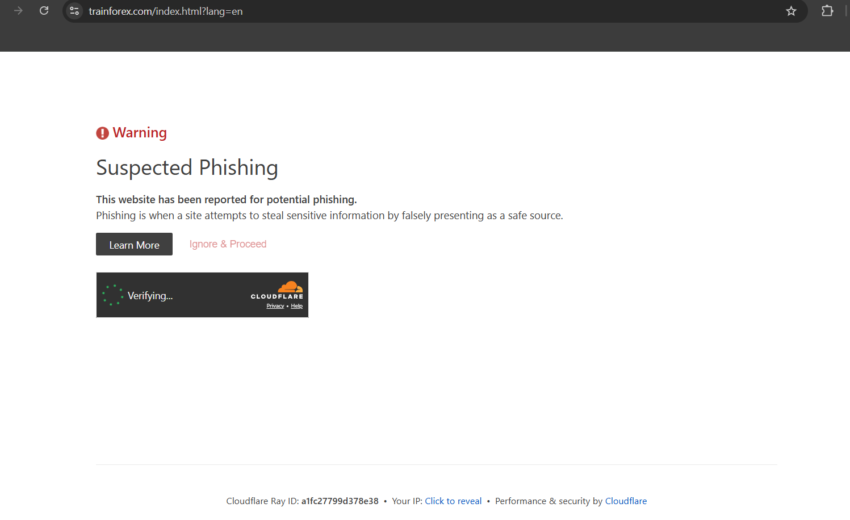
A Masterclass in Deception or a Legitimate Broker?
The internet has democratized trading, making it easier than ever for everyday people to access global financial markets. Unfortunately, this digital revolution has also opened the floodgates for sophisticated online predators. If you have been browsing social media or searching for ways to grow your savings, you may have stumbled upon TrainForex.com.
Promising high returns on currency pairs and digital assets, this platform looks professional at first glance. But before you deposit a single dollar, you need to ask yourself: is TrainForex.com a legitimate gateway to financial freedom, or is it just another carefully disguised online wealth trap?
In this comprehensive review, we will dissect how TrainForex.com operates, expose its glaring red flags, and provide actionable advice if you or someone you know has already fallen victim to their schemes.
Introduction: The Illusion of Easy Trading
TrainForex.com presents itself as a modern, high-tech online brokerage catering to both novice and experienced traders. According to their website, they specialize in forex trading, commodities, indices, and cryptocurrencies. They boast advanced charting tools, ultra-low spreads, and lightning-fast execution speeds designed to help users maximize their trading potential.
Why do so many people believe them?
Fake investment companies excel at psychological manipulation. They build sleek, user-friendly websites adorned with stock photos of smiling traders, glowing testimonials, and official-looking regulatory badges that often turn out to be completely fake. When a visitor lands on TrainForex.com, they see an environment that mimics legitimate platforms like Investopedia or regulated brokers found on BrokerCheck by FINRA.
In reality, online financial scams operate on the principles of smoke and mirrors. Behind the polished user interface lies a closed system—a simulated trading platform where no actual market transactions take place. Your money never touches the global interbank market; instead, it goes straight into the pockets of anonymous operators.
Big Promises: The Hook That Reels You In
To understand how fake investment platforms like TrainForex.com trap their victims, you have to look at the promises they make. Unrealistic expectations are the primary bait used to lure in unsuspecting investors who are looking to beat inflation or escape financial hardship.
When dealing with platforms like TrainForex.com, victims are typically lured in by a standardized playbook of grand promises:
- Guaranteed Daily or Weekly Returns: Legitimate investing always involves risk. No real broker can guarantee fixed, high-percentage returns on forex or crypto trading. Yet, TrainForex.com often dangles the prospect of risk-free profits.
- High Leverage and Low Margins: They promise massive leverage ratios (e.g., 1:500 or higher), making inexperienced traders believe they can turn a small $250 deposit into thousands overnight.
- Dedicated “Account Managers”: Friendly, highly knowledgeable support agents are assigned to your account almost immediately. They call you daily, offering expert market insights, cheering on your “success,” and encouraging you to deposit more funds to capitalize on “once-in-a-lifetime market opportunities.”
- Bonus Incentives: They offer massive deposit bonuses (e.g., “Deposit $1,000 and get a $1,000 trading bonus!”). What they don’t tell you in the fine print is that these bonuses come with impossible turnover requirements designed to lock your original capital inside the platform forever.
Red Flags: Spotting the TrainForex.com Scam
If you dig beneath the shiny surface of TrainForex.com, the illusion quickly falls apart. Operating similarly to boiler-room operations tracked by consumer protection agencies worldwide, the platform exhibits classic warning signs of an unregulated online investment scam.
| Red Flag | Description |
|---|---|
| Lack of Regulation | TrainForex.com does not hold a valid license from reputable financial authorities such as the UK’s Financial Conduct Authority (FCA), the US Securities and Exchange Commission (SEC), or the Australian Securities and Investments Commission (ASIC). |
| Anonymous Ownership | The website lacks transparent corporate information. There are no verifiable physical addresses, executive names, or company registration numbers listed in public registries. |
| Unrealistic Profit Claims | Promising consistent, high-yield returns with little to no risk defies the fundamental laws of financial markets and investing. |
| Aggressive Upselling | Account managers constantly pressure users to deposit more money, often using high-pressure sales tactics or manufacturing fake trading emergencies. |
| Blocked Withdrawals | When users attempt to withdraw their profits or principal investments, they are met with sudden account freezes, unexpected “taxes,” or mandatory “withdrawal fees” that must be paid upfront. |
For more information on how to identify fraudulent brokers, you can reference the warnings published by the Commodity Futures Trading Commission (CFTC) regarding forex scams.
Effects on Victims: The Hidden Human Cost
The damage caused by fraudulent investment platforms extends far beyond monetary loss. When people realize they have been scammed by companies like TrainForex.com, the ripple effects touch every aspect of their lives, causing severe psychological and emotional distress.
| Impact Category | Description of Effects |
|---|---|
| Financial Devastation | Loss of life savings, retirement funds, or borrowed money, often leading to immediate debt, unpaid bills, and long-term financial instability. |
| Psychological Stress | High levels of anxiety, depression, shame, and self-blame. Victims often struggle to sleep or concentrate due to constant worry. |
| Trust Issues | Severe damage to interpersonal relationships and a deep-seated distrust of banks, financial institutions, and legitimate online services. |
| Secondary Victimization | Vulnerability to “recovery scams,” where fraudulent entities target past victims a second time, promising to get their lost money back for an upfront fee. |
According to reports by the Federal Trade Commission (FTC), investment scams cost consumers billions of dollars annually, highlighting the devastating scale of these operations.
Recovery Solutions: What to Do If You Got Scammed
Discovering that you have been scammed by TrainForex.com is a terrifying experience, but panicking will only cloud your judgment.
Seek professional Guidance:
it is often helpful to seek Legal or Expert assistance to determine the possible options available. Report to WEALTHTRACKERLTD, to share your story, seek guidance and get information on recovery options at no cost. While recovering funds from offshore, unregulated crypto or forex scams is notoriously difficult, it is possible with expert help. These are concrete steps you can take immediately to mitigate the damage and explore your options.
1. Contact Your Bank or Payment Provider Immediately
If you deposited money into TrainForex.com using a credit card, debit card, or wire transfer, contact your financial institution right away. Report the transaction as unauthorized or fraudulent.
- Credit Cards: Ask about initiating a chargeback. Credit card companies have consumer protection policies that allow you to dispute charges for services not rendered or fraudulent merchant activity.
- Bank Wires: Request a recall of the wire transfer, though success rates are low if the funds have already left your bank.
2. Document Everything
Do not delete your account, chat logs, emails, or phone records. Collect and save all possible evidence:
- Screenshots of your account balance, trading history, and deposit receipts.
- Copies of emails, WhatsApp messages, or Telegram chats with your “account manager.”
- Bank statements showing where the funds were sent. This documentation will be essential when filing formal reports.
3. Report the Scam to Authorities
File official complaints with consumer protection and law enforcement agencies. Depending on your country of residence, you should report TrainForex.com to:
- United States: The FBI Internet Crime Complaint Center (IC3) and the FTC.
- United Kingdom: Action Fraud, the UK’s national fraud and cybercrime reporting center.
- Canada: The Canadian Anti-Fraud Centre (CAFC).
- Australia: Scamwatch operated by the ACCC.
4. Beware of Recovery Scams
This is the most critical warning for anyone who has lost money online: Do not trust anyone who contacts you claiming they can recover your lost funds for an upfront fee. Hackers, cyber-vigilant groups, and fake law firms frequently scour public scam forums looking for victims. They will pose as ethical hackers or legal recovery specialists, promising to trace the crypto wallet or hack the scammer’s database to get your money back. Once you pay their “fee” or “software license cost,” they disappear, leaving you scammed a second time.
Conclusion: Protect Your Hard-Earned Money
Navigating the digital financial landscape requires constant vigilance. Based on our analysis of unregulated operations, TrainForex.com displays all the classic hallmarks of a fraudulent investment scheme designed to separate you from your money.
If you have not yet invested with them, walk away immediately and look for fully licensed, transparent financial institutions registered with recognized regulatory bodies. If you are already a victim, take a deep breath, secure your personal accounts, contact your bank about chargeback options, and report the platform to the appropriate authorities & report the incident to WEALTHTRACKERLTD, which helps to determine your options without any charges upfront. Early action can improve the chances of limiting further losses and may assist any subsequent investigation
Stay skeptical, do your research, and remember the golden rule of online investing: If it sounds too good to be true, it almost certainly is.
Disclaimer
This review is based on common risk indicators, consumer feedback, and general patterns associated with online financial fraud. The views expressed are for informational and educational purposes only and do not constitute formal legal or financial advice. If you require assistance regarding a financial dispute, consult a qualified, licensed professional or local law enforcement agency.
